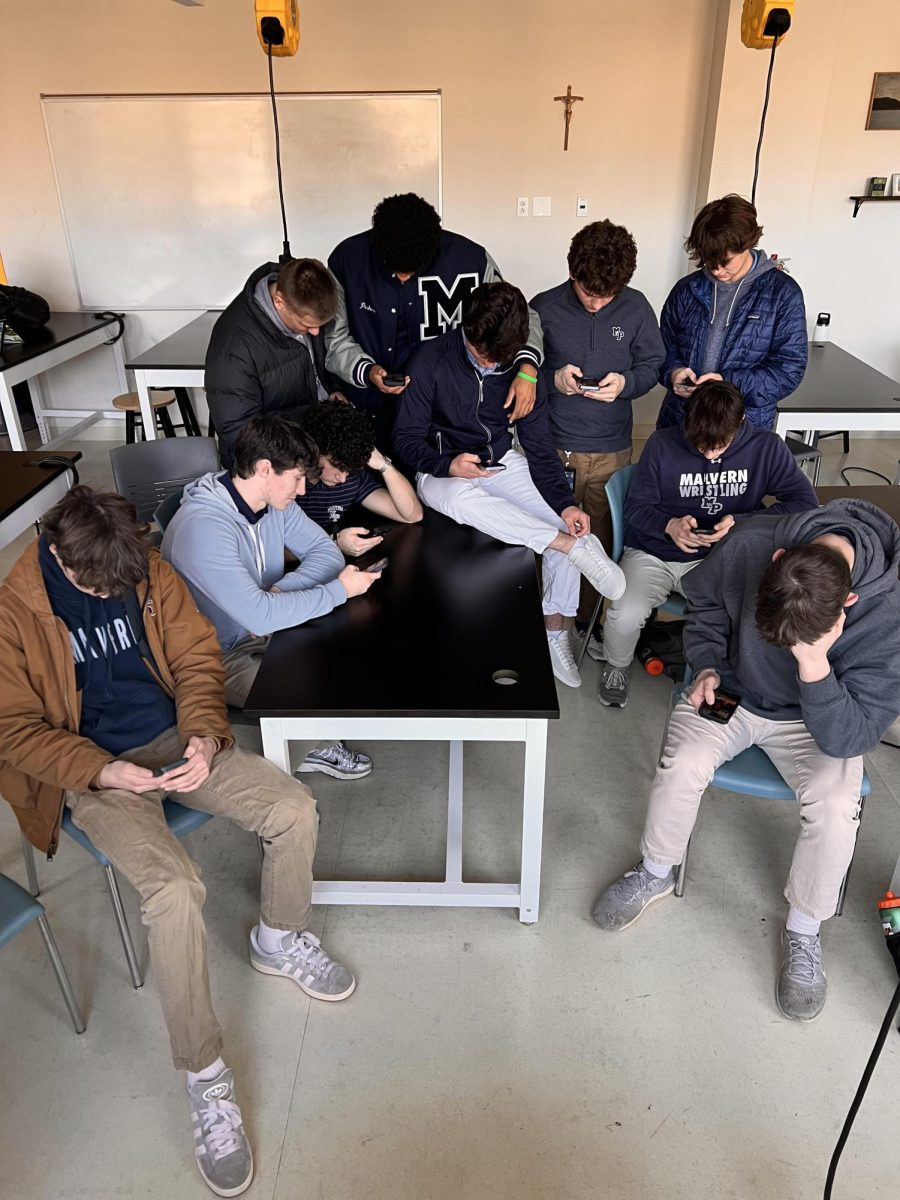
The Tea app, while not a traditional dating app, provides a platform for women and girls to share and offer anonymous information about men. When a young woman downloads the app, she must first verify her gender by submitting a photo of her face. Once she is accepted, she is free to post anything. It has quickly become a source of concern at many high schools across the country. While the app’s intentions are supposed to be positive, it is completely anonymous, which potentially creates significant risks to those being posted about.
Ms. Doireann Duffy, an Upper School counselor at the Academy of Notre Dame de Namur, an all-girls school in Villanova, PA, offered insights on the app and its flaws.
“The Tea app is supposed to be a dating safety app for women, due to the anonymity it carries heavy risks around privacy, harassment, and defamation.” Ms. Duffy said.
Though the app may seem harmless to some, its effects on high school students are profound. This is not the first time an app like this has been used in a negative way. Anonymous apps, in general, tend to turn negative when their main audience is high school students. This is because these apps have little or no repercussions to the activity of the users on the app.
The app’s popularity has a direct effect on gossip and rumors. Along with gossip and rumors has come bullying and harassment. The impact goes beyond this as it affects many teenagers’ mental health. When people have the ability to post anonymously, it creates anxiety and insecurity in the person being posted about. This is an issue because at the current age of app users, there is immense emotional instability, and one negative comment can have huge effects on a person’s mental health. Ms. Duffy reflected on how the app has affected mental health.
“Students may worry if their name is on there or what others might be saying. Even if they’re not mentioned, just seeing others judged publicly can make them question themselves.” Ms. Duffy said.
The constant threat of exposure and gossip that this app creates causes an immense amount of stress and self-doubt that shapes the way teens think about themselves and each other. A junior at The Agnes Irwin School (AIS), an all-girls school located on the Mainline who requested to remain anonymous, spoke about her experience with the app.
“It’s gotten worse because you can kind of predict who wrote certain things, and some people were saying bad things about other girls on the app, even when it was intended to be just [about] guys,” our source said.
Even though the app was meant for young women to share experiences about young men, it quickly became a platform for rumors and drama that extended to include information about girls as well. The app started shifting this way as girls began mentioning other females’ names in posts about guys. Even though technically the post was about a guy, girls would mention ex-girlfriends or other girls who may have been involved with him to get at the boy in question, as well as the girls named in the posts. Our AIS source elaborated on the rumor mill that this app fuels.
“Also, a lot of girls with boyfriends or who were ‘talking to somebody’ [a precursor to exclusivity] felt the need to go on [the tea app] and look up their boyfriends or like who they’re talking to, and they didn’t really trust who they were talking to,” our AIS source said.
Girls who were entering into potentially exclusive relationships went digging into the Tea App for information on the guy they intended to, or were, already dating. Potentially creating distrust and disharmony based on anonymous gossip or online rumors. Malvern Prep Upper School Guidance Counselor Ms. Desiree Hall shared her insights on teenagers’ use of this type of social media outlet.
“My worry, though, is that it can sometimes be an echo chamber, where, if you are reiterating and reiterating an experience that you had with somebody and a girl is reading through all of these experiences, then it becomes that echo chamber, almost like reliving the experience they had with that one person and not giving them space to let go of resentment, or, in an even more extreme case, having a space and time to heal from some kind of trauma that may have happened” Hall said.
While much of the concern centers on the girls who use the app, it’s also important to look at the effects of the app on boys and young men. Many guys’ photos and reputations appear on this app without their consent, and they have zero control over what is being posted about them or who is doing the posting. For high school boys, the social effects can be damaging to their reputations because of what is on the app. Malvern Junior Colby Komancheck shared his thoughts.
“I don’t love it because I don’t know if I’m on it or not. I mean, I don’t know who could say something bad about me, or it could be someone I’ve never met, and they something happened to their friend, or something along those lines, and they want to put something bad out there about me. I’m not sure that’s how everyone else feels, like they don’t like the fact that it’s anonymous, and anonymous people could be talking poorly about them,” Komancheck said.
While the Tea app was created to help women share information about guys and keep each other safe, the app’s anonymous feature has allowed it to become a place of gossip and drama. Both girls and boys are feeling the consequences of things like loss of trust and friendships to emotional stress and anxiety. Whether in person or online, high school communities and teens should promote respect and accountability instead of apps that create secrecy and drama. True connection and safety for teenagers come from honesty and kindness, not cruel anonymous judgment.
Recently, after a large number of complaints and many allegations of sharing minors’ information, the Tea app was taken off the app store. Though a new app has been created called Tea on Her, which is ultimately the same app as before, except for this one is meant for males to share spicy information on girls. Most likely, this app will be taken down for similar reasons once it becomes popular. But for now, it remains a source of information sharing, some of it potentially false or damaging. As apps like Tea Shape affect how teens connect, they also redefine what dating means today by shaping how trust is built in a relationship in the digital age.