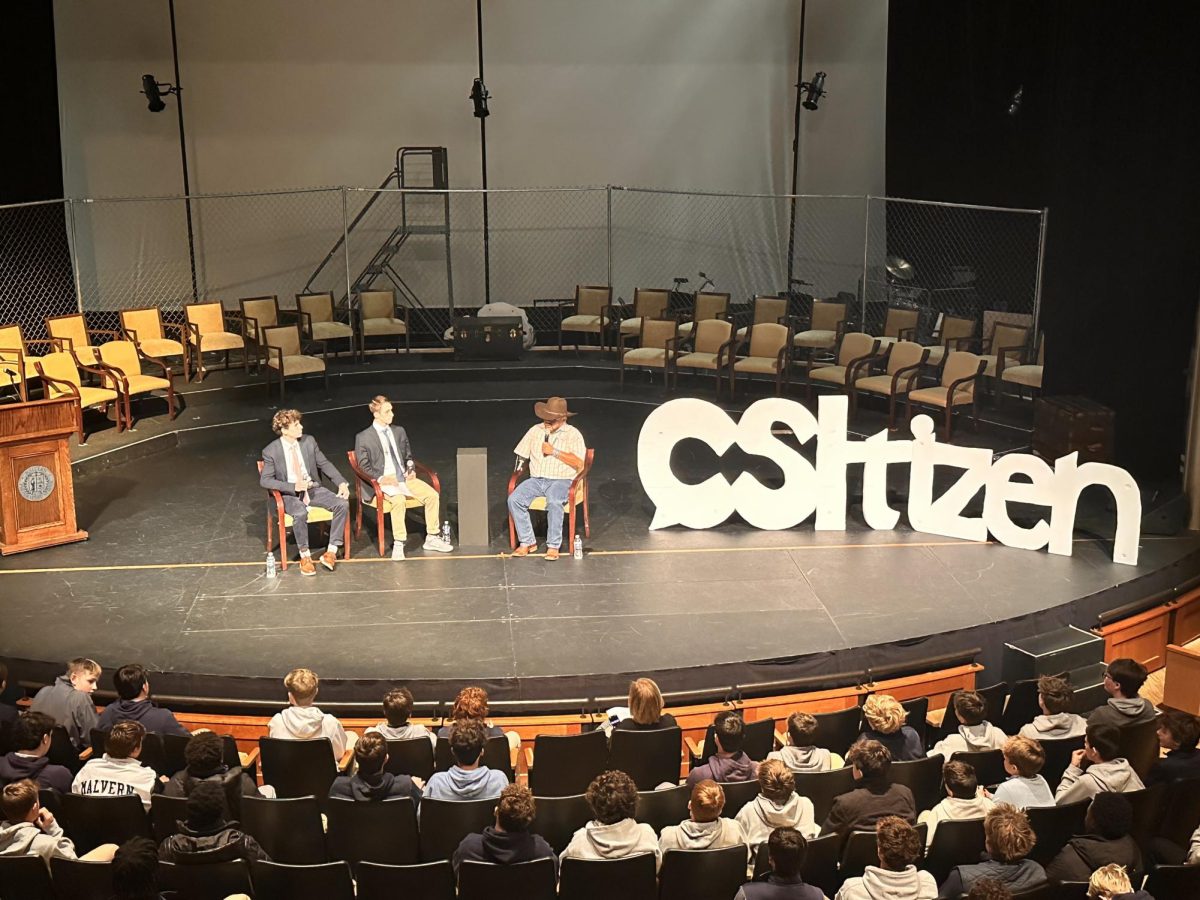
At Malvern Preparatory School, the Student Idea Center serves as a prime resource for students’ creativity. Known for its microcourses and independent studies, this relatively new addition to Malvern’s campus helps transform the community through student innovation. In fact, the Student Idea Center’s most notable feature is its incubator grants. Incubator grants are funds from Malvern to support selected students’ projects or ideas. These projects have a substantial impact on the community that solves issues throughout Malvern and the greater community.
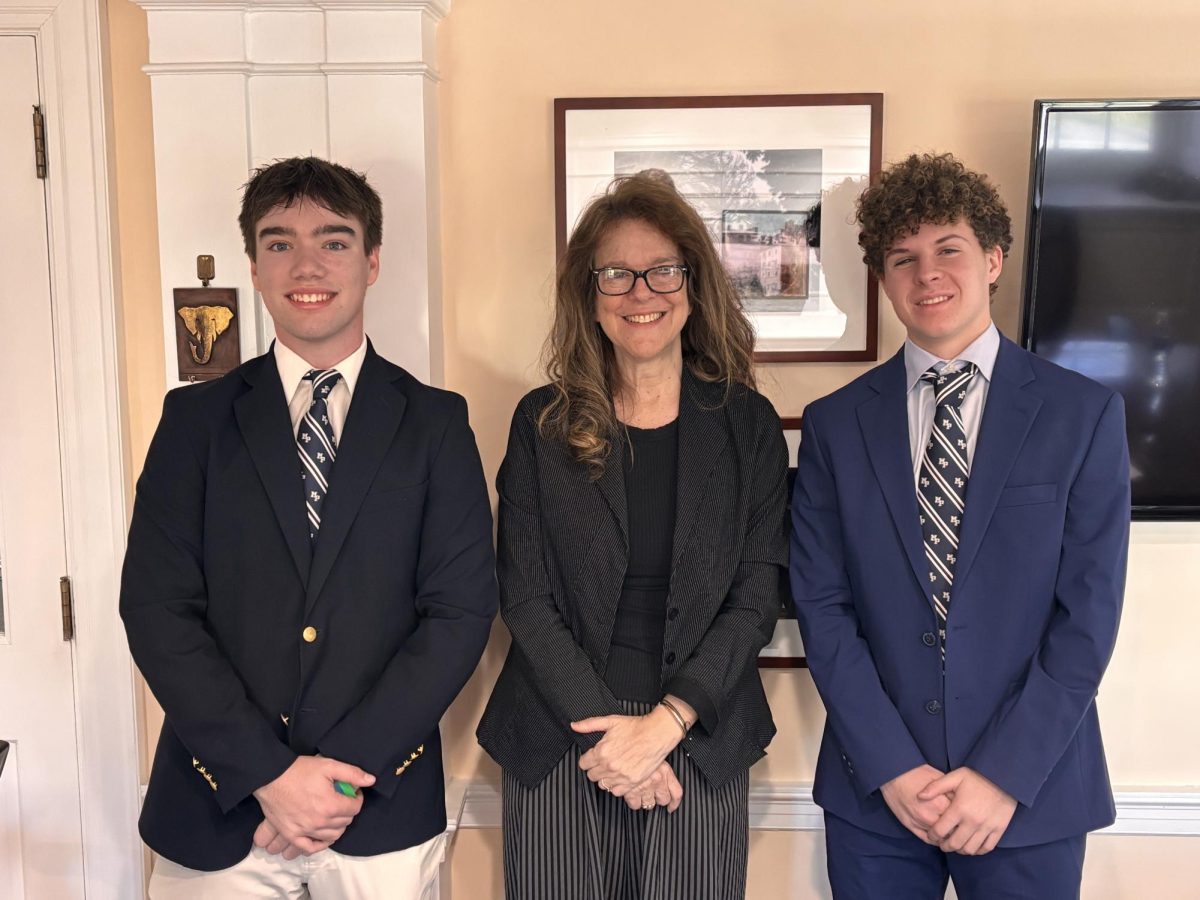
A major incubator grant a student received last year is still being worked on. The Incubator Grant was given to fund an upcoming documentary produced by Class of 2026 students Finn Riley and Jaime Schlichtig. These students have been working extensively on their film and have spent countless hours conducting interviews to uncover an impactful story that everyone should be aware of and learn from.
Ms. Metty Vithayathil, Director of the Student Idea Center, affectionately known as ‘Ms. V’ explains how Jaime and Finn started their idea. Both students have backgrounds and skill sets that have helped them in their production process, from editing to filming. As a result, they came together to help shed light on a major problem outside Malvern.
“Finn and Jaime approached me over a year and a half ago with the idea. Finn had been going to Visitation Homes for years with his family and was familiar with the amazing work the organization is doing for individuals in need of housing and other supportive services in the Kensington area. Jaime has a lot of expertise in production, and the two came together to share the story of Visitation. They first began working on the documentary as an Independent Study with Mr. Wasson as their mentor. Last year, during Learning Demonstration Day, they shared a trailer with the community. It was a really moving piece,” Vithayathil said.
Ms. V. talked about how the Student Idea Center aims to support Finn and Jaime, who received help through the center, helping them significantly. The Student Idea Center offers incubator grants to Malvern students that they can apply for, which is the primary support system.
“The Student Idea Center first supported Jaime and Finn through an Independent Study with Mr. Wasson as their mentor. During this time, they secured initial interviews at Visitation Homes and created the trailer for their documentary. Later, Jaime and Finn received one of our Incubator Grants to continue to support their work. Through the Incubator Grant, they have secured editing software to produce their final documentary and have worked with Mrs. Catania in Mission and Ministry to bring student volunteers to Visitation Homes,” Vithayathil said.
In addition, Ms. V. shared why it is important to understand and recognize the meaning of the film. People around the world suffer from many problems, and this one in particular is deeply impactful. The community needs to know the message from the film.
“Residents and staff at Visitation shared unique and powerful stories with Jaime and Finn. These are stories we might not otherwise encounter; they help us build understanding and empathy. I think the Malvern community will be moved by the documentary,” Vithayathil said.
Finn Riley explains his own project with Jaime Schlichtig. Both seniors have received a major incubator grant to produce their film, which contains a significant story. Their piece highlights the crucial message that people must learn, know, and be aware of in life.
“Jaime and I are working on this project, basically, a small short documentary, roughly 15 minutes, following this nonprofit in Kensington. It’s called Visitation. They encompass a lot of things they do, like housing. They feed a lot of families in need. I think they have 18 housing apartments for families that would otherwise be homeless. They have a community center [for] relaxation, and give out a lot of food just to anybody who wants it. They also have a school for a lot of the kids in the area,” Riley said.
Riley mentioned that the Student Idea Center, run by Ms. V. and Mrs. Lappas, supports their film because, without the center, they would receive considerably less support. Having strong mentors and teachers adds more comfort to both students, allowing them to work with ease.
“They’ve done a lot. First of all, we needed an incubator grant for some of the stuff, like the editing software. Just to have a mentor, which is now Mr. Wasson, telling us what we should do with different camera angles, with the lighting, with everything, and even the most basic stuff like keeping us on track. Ms. V. and Mrs. Lappas would [help us] reconvene and look at some of the videos and set everything up. They’re helping us get connected with people; we need that,” Riley said.
Finn, an incoming freshman at USC in the fall, shared his inspirations of what motivated him to start this project. Specifically, he elaborated on how he wanted to make an initiative to help and make a major impact through a media production.
“For me, my first independent study ever was sophomore year, and it was on philanthropy. It was Ms. V and I reading this book and critiquing it. Then, at the end of the year, I told Ms. V that ‘now that I have read about it, I want to actually have an impact myself.’ At the time, my sister was going into USC film school, and she told me how cool it was that they were doing all this movie stuff. I was interested in that idea, so I asked the school if maybe next year, starting junior year, I could work along with Jaime, and we could make this film together,” Riley said.
The impact is critical for the people because those who are affected need help and support. Millions of people in America suffer from poverty and homelessness, but there is obviously a large portion of people attempting to turn their lives around, which is why Visitation exists.
“They say how all you see on the news makes Kensington out to be this hopeless place full of criminals, drug addicts, and none of the [people] will get better. But when you talk to these people, you see they really are trying to make a difference. All are hard at work and effort is kind of being underrepresented by the media in general. I think it’s really important that people go and experience it themselves. For example, I interviewed this person recently; they were a former drug addict, and now, they have kids, they have a family. I think you just need to kind of hear those stories because they want you to think that this is just some desolate place nearby that we just have to drive through to get down to the shore, go down,” Riley said.
Riley also talked about the production aspect of the documentary. It is no easy or typical task to design an entire film, and there is so much work that goes into creating the entertainment. From conducting the interviews to stitching everything together through editing, it takes a lot of effort to produce a quality film.
“Behind the scenes, our stuff takes a lot of work, much more than I would prefer. You’re gonna film for three hours straight and realize maybe five minutes of that is usable. It sucks because I thought it was gonna be easy, a very straightforward process, but you’re gonna realize there’s gonna be so many obstacles in the way, and you kind of just have to maneuver around them,” Riley stated.
Absolutely, there are going to be many obstacles during editing. Jaime Schlichtig added his thoughts about how difficult it is to edit and obtain film. It is a much more complicated process, and a lot of time goes into the behind-the-scenes. It takes hours and hours to get the perfect audio, video, and even to ensure that the flow of the film is perfect, too.
“So, just behind-the-scenes work, like filming, we need significantly more film than what we will actually use, and editing is just very tedious. It takes a while because you have to pick the perfect clip, and that’s difficult just to go through all the footage,” Schlichtig said.
Schlichtig talked about the significance of Visitation and why students should be aware of what is going on in Philadelphia. Many people suffer; however, that suffering is being transformed positively: people are changing their lives entirely.
“It’s important for people to understand because it’s so easy for people to think about a place like Kensington and everything in it and easily dismiss it as a bad place, and, you know, somewhere not to be with everyone thats drug addicts, but our documentary will show them that they are human and that they just wanted a second chance, and that they’ve been caught in a bad situation, that they just need help . . . I’d say the main message is that these people that are so often dismissed are human. There’s one woman from when we were interviewing people. She said, ‘We’re people here, not out there. We’re people here.’ Visitation homes humanize these people that have been overlooked. It helps them be understood. These people are people. Don’t overlook them,” Schlichtig said.
Schlichtig also noted certain ways to support or help these individuals in Kensington. Anyone can make a difference and help provide for people in need because everyone on this planet needs help in their lives in one way or another.
“There are opportunities to go down and help the people that they’re going to see in the documentary. Finn and I have set up multiple service opportunities to go down there and help work their food pantry, and just work with the people down there and see what they’re actually like, and see that they are real people that just need help. After the documentary, we would hope that people are more inspired to help everybody and not be as quick to judge somebody that they don’t know their story, and hopefully donate to this place because they do good work,” Schlichtig said.
Mrs. Lappas, Director of Community Partnerships, shared her thoughts about the film. She had a meaningful connection with the film, and it stood out to her. The visual shots from the documentary helped capture the real essence of why it is important to understand.
“After viewing the documentary Visitation Homes, I was touched in a very emotional way. Somehow, when I think of our homeless citizens, I never really think about an entire family being homeless. The descriptions of children trying to sleep and hearing gunshots, and walking through needle-strewn streets on the way to school, broke my heart. Hearing the first-hand accounts of the residents made these images very real and elicited in me a sadness and a shame that more is not being done,” Lappas said.
In addition, Mrs. Lappas talked about the takeaways that she learned from the film. It opened her perspective more broadly about this issue due to the many standing themes throughout the film.
“I learned about how catholic charities supports so many groups that try to bring some normalcy to the lives of the people who are in need. Jaime and Finn are really messengers communicating the dire need for volunteers and funds that would be beneficial to our society as a whole, as we lift up its marginalized members,” Lappas said.
The Student Idea Center at Malvern Prep serves as a substantial part of the school where students come up with their own interesting ideas. Jaime Schlichtig and Finn Riley are two creative and wise Malvern students who pursued a project through the Student Idea Center is certainly a motivating story and impactful message that they hope to spread to the Malvern community. Making a documentary is no ordinary task that you see around campus, yet these seniors strove to create an original film that reveals distinct meanings; it possesses the true value of what Malvern stands for.